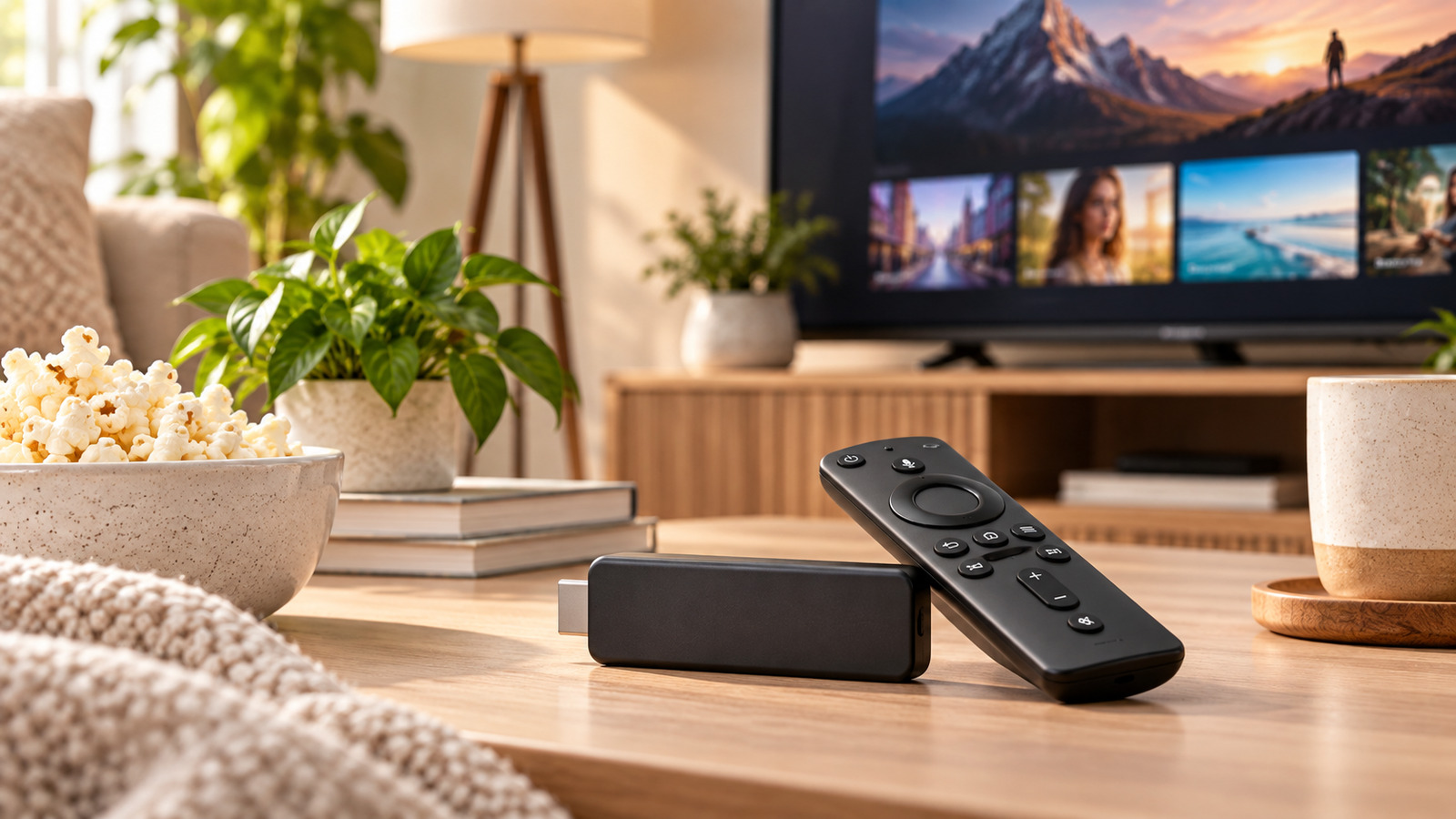
Start with the television you already own
Before buying a streaming device, check what your TV can already do. Many recent TVs have built-in streaming apps. A separate device is still useful if your TV's apps are slow, missing, no longer updated, or if you want a consistent interface across several TVs.
Check your TV's resolution and HDR support. A 4K streaming device only makes a visible difference on a 4K TV. If you have an older 1080p TV, a less expensive HD device may be all you need, although a 4K device can be a sensible choice if you plan to upgrade the TV soon.
Resolution, HDR and audio formats
If you have a 4K HDR TV, check which HDR formats both the TV and the device support, such as HDR10, HDR10+ or Dolby Vision. A format only works if the TV, the device and the streaming service all support it.
For sound, check support for formats such as Dolby Atmos if you have a compatible soundbar or receiver. Also check whether the device can output audio over HDMI eARC or via Bluetooth headphones, which is useful for late-night viewing.
App support should match your subscriptions
The most important feature of a streaming device is whether it runs the services you pay for. Most major platforms support the big streaming apps, but availability can differ for regional services, live sports apps and smaller niche services. Check each platform's app store for the specific apps you use before buying.
Also think about ecosystem fit. Some devices integrate closely with a particular phone platform, voice assistant or smart home system, which can make screen mirroring and control easier.
Wi-Fi performance can be more important than processor speed
Buffering is more often a network problem than a device problem. 4K streaming needs a steady connection; many services recommend roughly 15 to 25 Mbps for 4K. Newer Wi-Fi standards can help if your router supports them.
If the TV is far from the router, a device with an Ethernet port, or an Ethernet adapter, gives the most reliable connection. Stick-style devices hidden behind the TV can have weaker reception; an HDMI extender cable can help.
Do not overlook the remote
You will use the remote every day. Look for:
- TV controls for power, volume and input, so you can put the TV remote away.
- Voice search if you find typing titles frustrating.
- Backlit buttons for dark rooms.
- A lost-remote finder, a surprisingly useful feature.
- Few advertising shortcut buttons, or buttons for services you actually use.
Interface, ads and privacy settings
Home screens differ a lot. Some focus on your apps; others promote recommended content and advertising. If a clean interface matters to you, look at recent screenshots before buying. Check privacy settings, such as options to limit ad tracking and viewing data collection, and whether the device receives regular software updates.
Common mistakes to avoid
- Buying a 4K device for a TV that cannot display 4K.
- Assuming every app is available on every platform.
- Blaming the device for buffering caused by weak Wi-Fi.
- Ignoring HDR and audio format compatibility with your TV and soundbar.
- Overlooking the remote's TV controls.
Quick buying checklist
- Check your TV's resolution, HDR formats and HDMI ports.
- Confirm every app you use is supported.
- Plan for a strong Wi-Fi signal or an Ethernet connection.
- Compare remotes, interfaces and privacy settings.
- Check software update support and current price on the seller's page.