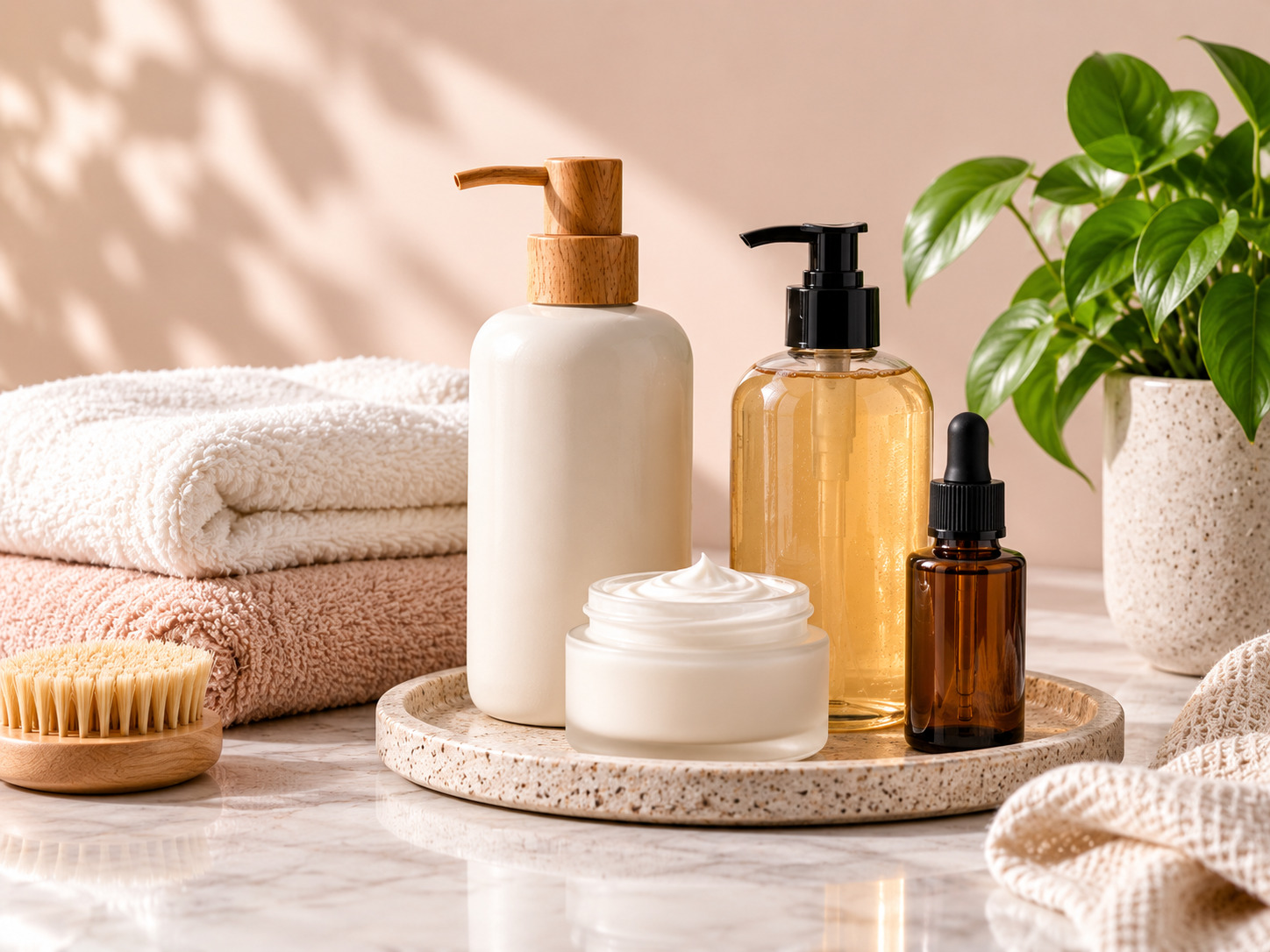
A simple routine is easier to evaluate
Skincare shopping can be overwhelming. A basic routine for many people includes a gentle cleanser, a moisturiser and, during the day, sunscreen. Serums and treatments can be added later for specific goals.
Starting simple makes it easier to see what is working and what is causing problems. If you introduce several new products at once and your skin reacts, you will not know which one was responsible. Adding one new product at a time, and giving it a few weeks, is a more reliable approach.
This guide is general shopping information, not medical advice. For persistent skin conditions, speak to a pharmacist, doctor or dermatologist.
Cleansers: gentle usually beats strong
A cleanser's job is to remove dirt, sweat, sunscreen and makeup without stripping the skin. If your face feels tight or squeaky after washing, the cleanser may be too harsh. Common types include:
- Gel cleansers: often preferred by people with oily skin.
- Cream or lotion cleansers: often suit dry or sensitive skin.
- Foaming cleansers: can feel refreshing but some are drying.
- Oil or balm cleansers: help remove makeup and sunscreen, often as a first step.
Texture should fit your skin and climate
Moisturisers range from light gels to rich creams. Oily and combination skin often prefers lighter textures, while dry skin and cold, dry climates may need richer creams. Many people use a lighter moisturiser in summer and a richer one in winter.
Ingredients such as glycerin, hyaluronic acid and ceramides are common in moisturisers. Labels such as "non-comedogenic" suggest a product is formulated to reduce pore-clogging, although there is no guarantee for every person.
Sunscreen is the everyday essential
Daily sun protection is one of the most widely recommended skincare habits. Look for broad-spectrum protection, which covers both UVA and UVB, and an SPF appropriate for your exposure; many dermatology organisations recommend SPF 30 or higher for daily use. Apply enough product, and reapply when you are outdoors for long periods or after swimming or sweating.
The best sunscreen is one you are happy to wear every day. Texture, finish and whether it leaves a white cast often decide that more than any other factor.
Read active ingredients before combining products
Serums and treatments often contain active ingredients such as retinoids, vitamin C, niacinamide, and exfoliating acids like AHAs and BHAs. These can be useful, but combining several strong actives can cause irritation. Exfoliating acids and retinoids can also make skin more sensitive to the sun.
Introduce actives one at a time, start with lower frequencies, and follow the product's directions. If you use prescription treatments, check with your prescriber before adding over-the-counter actives. Some ingredients are not recommended during pregnancy; ask a healthcare professional if this applies to you.
Fragrance and sensitivity deserve attention
Fragrance and some essential oils are common causes of irritation for sensitive skin. If your skin reacts easily, look for fragrance-free products and check the full ingredient list. "Unscented" does not always mean fragrance-free, because masking fragrances are sometimes used.
Patch test new products on a small area, such as behind the ear or on the inner arm, for a few days before applying them to your whole face.
Value and packaging
Compare price per millilitre or gram. Packaging can also matter: pumps and tubes limit air and finger contact, which helps some formulas stay stable. Check the period-after-opening symbol, usually shown as an open jar with a number of months, to see how long the product is intended to be used after opening.
Quick buying checklist
- Start with cleanser, moisturiser and daily sunscreen.
- Choose textures for your skin type and climate.
- Pick broad-spectrum sunscreen you will actually wear daily.
- Add one active ingredient at a time.
- Prefer fragrance-free products if you are sensitive, and patch test.
- Seek professional advice for persistent skin concerns.