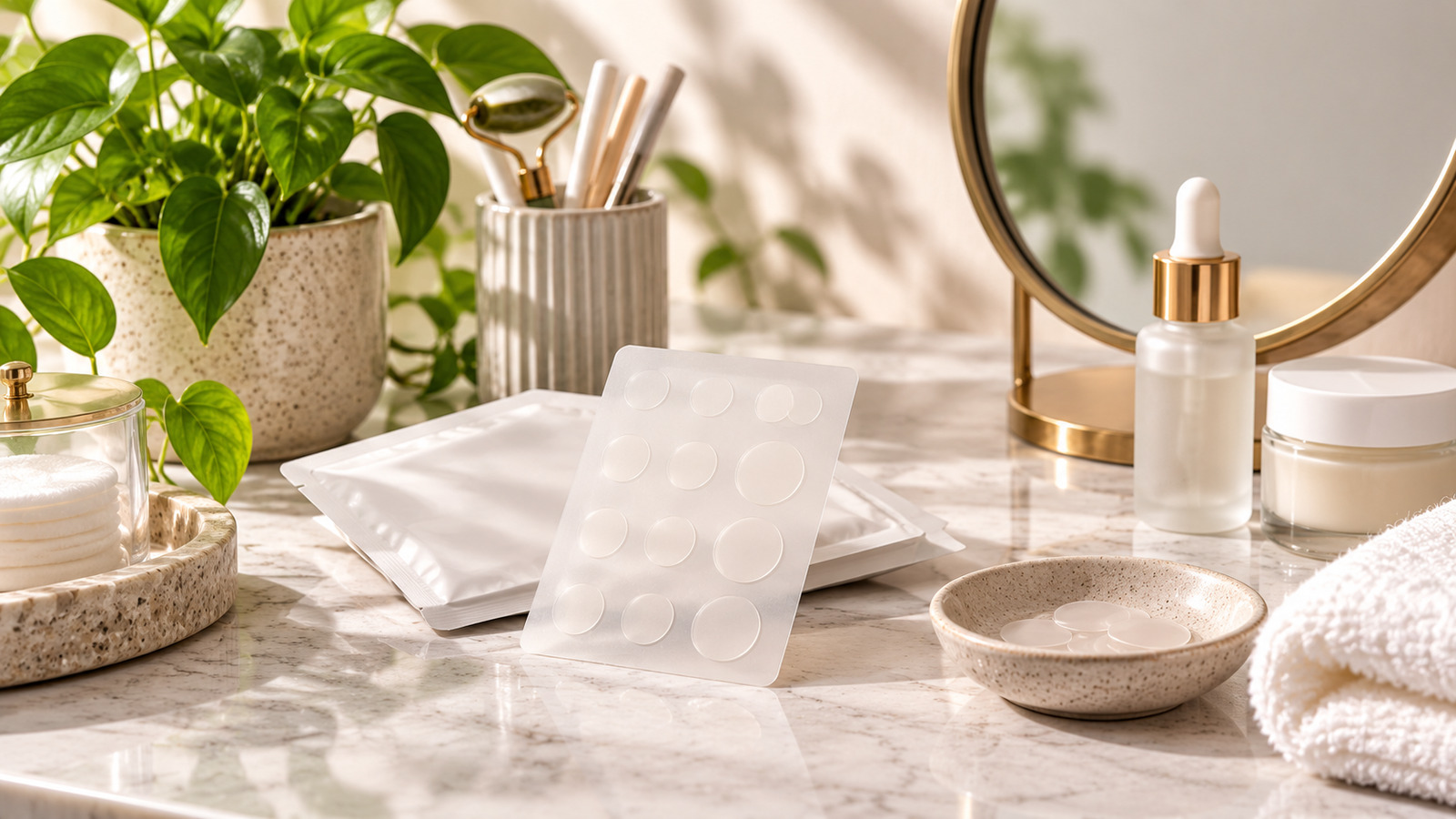
Understand what hydrocolloid patches are designed to do
Most acne patches are made from hydrocolloid, a material originally used in wound dressings. It absorbs fluid and creates a moist, covered environment. For spots that have come to a head, a patch can absorb fluid, protect the area from picking and touching, and act as a discreet cover.
Patches are not a cure for acne. They work best on individual surface spots rather than deep, painful bumps under the skin. Persistent, severe or painful acne is worth discussing with a pharmacist, doctor or dermatologist, who can recommend proven treatments.
This guide is general shopping information, not medical advice.
Different types of patches
- Plain hydrocolloid patches: no added active ingredients. Often the gentlest choice for sensitive skin.
- Medicated patches: include ingredients such as salicylic acid, tea tree oil or niacinamide. These may help some people but can irritate others.
- Microneedle or "microdart" patches: have tiny dissolving points intended for early spots that have not surfaced. Sensitivity and results vary, so read instructions carefully.
- Thin daytime patches: designed to be less visible under daily wear, sometimes with a matte finish.
Size and thickness affect how practical they feel
Patches come in various sizes, often in assorted packs. A patch should cover the spot with a small margin of clear skin around it so the edges stick well. Very small patches can lift at the edges, while large patches may wrinkle on curved areas such as the chin or nose.
Thinner patches blend in better during the day, while thicker patches are often used overnight because they can absorb more fluid. If you wear makeup, check whether the patch has a matte surface and how well it sits under or over products.
Check added ingredients if your skin is sensitive
Read the full ingredient list, not only the front of the pack. Fragrance, essential oils and some acids can irritate sensitive or already inflamed skin. If you already use other acne treatments, such as prescription creams, adding a medicated patch on top may increase dryness or irritation.
Patch test a new product on a small area first. Stop using it if you notice burning, spreading redness, swelling or itching, and seek advice if a reaction does not settle.
Adhesion works best on clean, dry skin
Patches stick best when applied to skin that has been gently cleansed and dried, before serums, oils or moisturisers. Press it on for a few seconds so it warms and seals. Many people leave a patch on for several hours or overnight, following the product's instructions. A patch that has turned white or cloudy has usually absorbed fluid and can be replaced.
Avoid applying patches to broken, bleeding or infected skin unless the product specifically says it is suitable, and do not use them near the eyes.
Value and pack size
Compare the price per patch rather than the price per pack, as pack sizes vary a lot. Assorted-size packs are useful when you are still learning which size you need. Individually sealed sheets or resealable packs help keep patches clean and sticky.
Common mistakes to avoid
- Expecting patches to treat deep or cystic acne.
- Applying patches over moisturiser, so they fall off.
- Choosing medicated patches when you already use strong treatments.
- Picking a size that does not fully cover the spot.
- Ignoring signs of irritation.
Quick buying checklist
- Decide between plain, medicated or microneedle patches.
- Choose sizes that cover spots with a small margin.
- Pick thin patches for daytime and thicker ones for overnight.
- Read the full ingredient list and patch test.
- Compare price per patch.
- Seek professional advice for severe or persistent acne.